Where every plate has a past, every pattern has a personality, and every cup of tea tastes better when paired with a good story. Today, we’re curling up with one of the most iconic and enduring designs ever to grace a table: Blue Willow — a pattern that’s part legend, part history, and entirely charming.
The Enduring Charm of Blue Willow
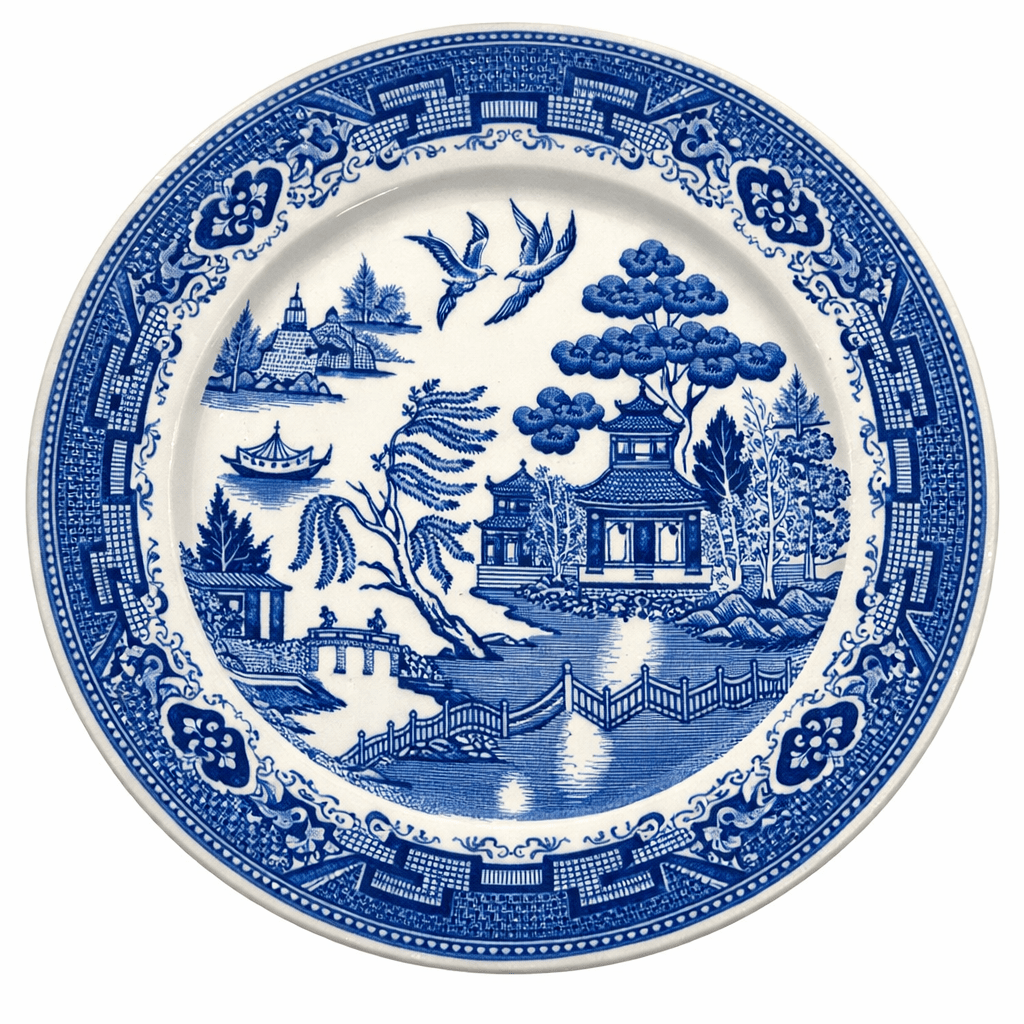
You’ve seen it — that dreamy blue‑and‑white china with the pagoda, the bridge, the willow tree, and those two little birds that seem to be whispering secrets. Maybe your grandmother had a set. Maybe you’ve spotted it at a flea market and felt a tug of nostalgia. Or maybe you’ve eaten a “Blue Plate Special” without realizing you were dining on centuries of storytelling.
So pour yourself a cup of something warm, settle in, and let’s wander through the world of Blue Willow.
A Pattern With a Past
Between the 1950s and 1970s, grocery stores like Winn‑Dixie, A&P, and Safeway handed out Blue Willow dishes through “piece‑a‑week” loyalty programs. You’d collect stamps, fill a booklet, and trade it in for a plate, a bowl, or even a full set. Imagine grabbing your groceries and walking out with a new dinner plate — talk about a reward worth saving stamps for.
But Blue Willow’s story doesn’t begin in the checkout line. To understand how it became the pattern everyone wanted, we have to go back. Way back. Way, way back… to the 18th century.
Not So Far East After All
Ask someone where Blue Willow originated and they’ll probably say “China” or “Japan.” Logical guess — it looks like something straight out of the Orient. But plot twist: Blue Willow was actually born in England in the late 1700s.
In the 16th century, European traders began bringing back exquisite blue‑and‑white porcelain from China. The color, the shine, the delicate artistry — it was unlike anything Europe had ever seen. Everyone wanted it, but European potters couldn’t replicate it. They didn’t have the right clay (kaolin) or the blazing hot kilns needed to create true porcelain.
Then came the game‑changer: transfer printing.
Instead of hand‑painting every detail, English potters engraved designs onto copper plates, inked them with cobalt, and pressed tissue paper onto the plate to pick up the image. That tissue was then laid onto pottery, transferring the entire scene in one go.
Note: Transfer printing was basically the “print button” of the 18th century — fast, consistent, and revolutionary.
By the 1780s, engravers at Caughley Pottery developed the Willow‑style design — exotic, romantic, and irresistibly blue. People fell in love instantly.
The Legend Behind the Pattern
No one knows exactly who dreamed up the Blue Willow story — maybe Thomas Minton, maybe Thomas Turner — but whoever it was, they were a marketing genius. The tale of forbidden love between Kwang‑se, the merchant’s daughter, and Chang, her father’s devoted clerk, gave the pattern a soul.
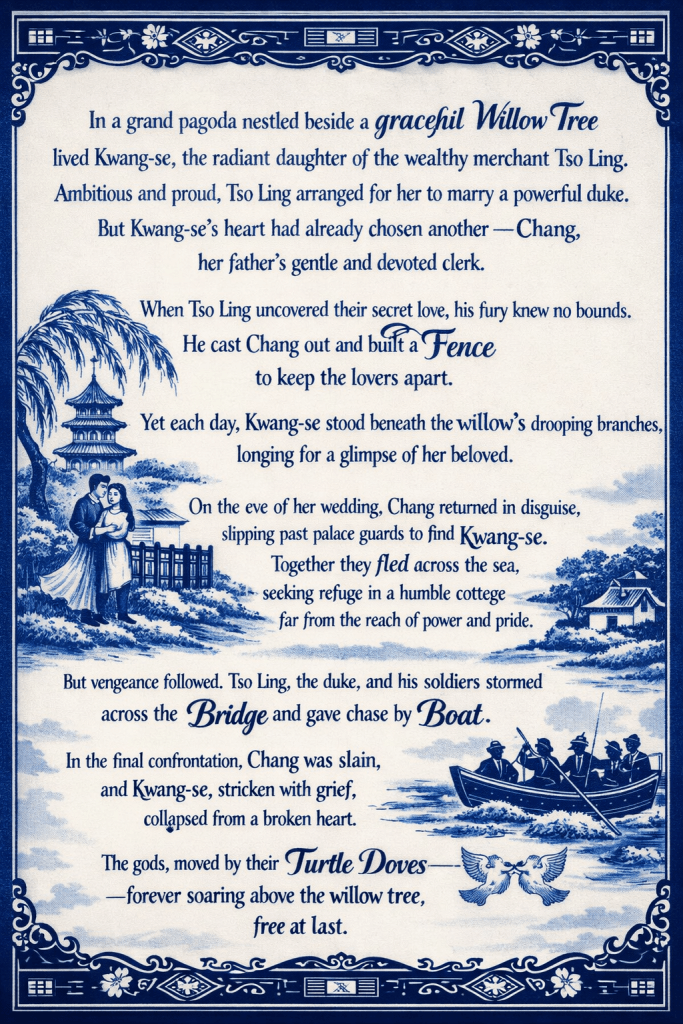
Blue Willow isn’t just a pattern — it’s a love story told in cobalt.
Not every blue‑and‑white plate is a Blue Willow plate. There are plenty of look‑alikes, but true Blue Willow has five telltale features:
- Willow Tree
- Fence
- Bridge
- Boat
- Turtle Doves
If your plate has all five, congratulations — you’re holding a piece of history.
Blue Willow in Modern Times
Fast‑forward a few centuries, and Blue Willow is still everywhere. You’ll find it on china, wallpaper, jewelry, clothing, and home décor. It’s not just blue anymore — there are red, green, black, pink, and multicolor versions too.
In the 1920s, diners served daily specials on Blue Willow grill plates, giving rise to the term “Blue Plate Special.”
Mid‑century stamp programs like S&H Green Stamps and Gold Bond let shoppers trade filled books for Blue Willow sets. Families built entire collections one grocery trip at a time.
Even Aunt Bea from The Andy Griffith Show adored her Blue Willow china — proof that it’s as much a part of pop culture as it is of history.
Collecting Today
Today, you can find pieces ranging from $10 thrift‑store treasures to antique showstoppers worth hundreds. A rare 19th‑century platter or a Tiffany & Co. Copeland Spode teapot can fetch $700 or more.
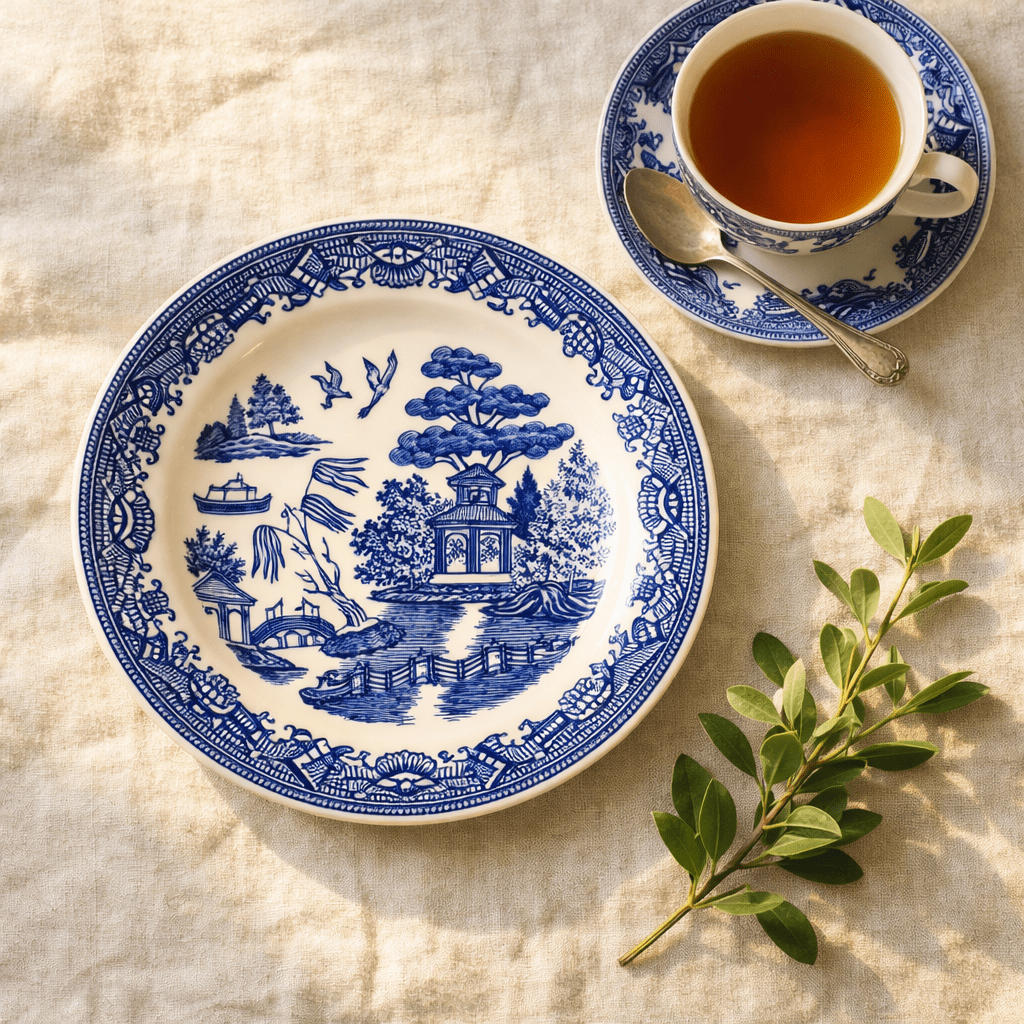
Collecting Blue Willow is easy, affordable, and endlessly rewarding. It sets a beautiful table, sparks conversation, and connects you to centuries of artistry and storytelling.
Why We Still Love It
Blue Willow isn’t just a pattern — it’s a story told in porcelain. It’s nostalgia, romance, and craftsmanship all rolled into one. Whether you’re sipping tea from a Blue Willow cup or spotting it in a vintage shop window, you’re part of a tradition that’s been passed down for generations.
It’s a classic for a reason — and it’s likely to stick around for quite a while.


 Tableware Tales
Leave a comment